
Get a dental crown that looks great on your face and your smile and is excellent for oral health!
In a more than 18-year career, Dr. Jamie J. Alexander has refined his skills as a restoration dentist. Individuals with badly broken, decayed, or otherwise damaged teeth in Boynton Beach, Florida, can trust that their dental restorations will successfully restore their teeth’ shape, size, strength, and function. Dental crowns represent one of the most versatile restorative treatments available at our Jamie J. Alexander D.D.S., P.A. office. While they are an important way to preserve severely damaged or deeply infected teeth, crowns are also appropriate to replace teeth that cannot be repaired with root canal therapy.
Crowns
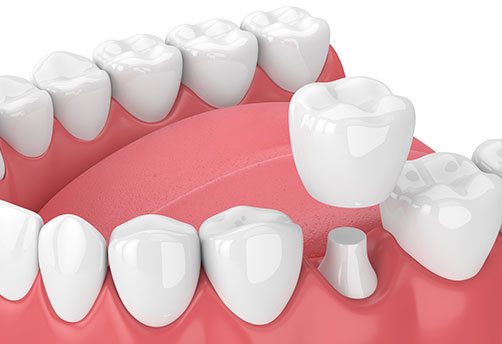
This standard procedure refers to the design, fabrication, and placement of a prosthetic, tooth-shaped “cap.” The cap may be made from a variety of “tooth-like” materials. Once it is shaped to replicate and replace the part of the tooth that is visible when you smile, the crown is fitted over the top of a tooth that has been “prepared” to “accept” the restoration. Preparation primarily involves removing any damaged tissue and shaping the natural tooth. So the crown can fit seamlessly on top of the tooth. In this manner, the structure, health, esthetics, and function of the tooth are restored.
Applications
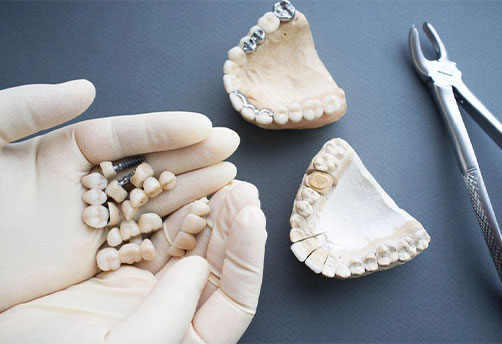
Crowns are generally appropriate for teeth severely damaged by progressive decay, injury, or trauma. Root canal therapy followed by a dental crown to support the sustained strength of the treated tooth may be the only way to avoid extraction or removal of deeply inflamed or infected teeth. Crowns are also used for tooth replacement; crowns are “anchor teeth” that are placed to hold up prosthetic teeth in a dental bridge. They also restore dental implants. The crown is connected to an implant embedded in the jaw. The implant then functions like a tooth root to stabilize the dental restoration.
Alternatives
Depending on what Dr. Alexander finds during an evaluation of your mouth, he may recommend alternative restorations such as porcelain veneers, inlays, or partial crowns (onlays). These options are more conservative than full-coverage dental crowns. Conservative options preserve the healthy natural tooth structure and are generally preferred over those treatments that drill away more of the original tooth.

Types of Crowns
Patients also have many options when it comes to the material that is used to make their crowns. Everything from the bite (how your upper and lower teeth fit together when your mouth is closed) to esthetics is accounted for when exploring materials for your crown. Options include:
• P.F.Z. (Porcelain Fused to Zirconia) – The crown’s “core” is made from zirconium oxide, an exceptionally strong biocompatible ceramic, while the visible outer structure is made from porcelain for unparalleled translucency, reflectivity, and color-shading
• P.F.M. (Porcelain Fused to Metal) – The innermost part of the crown is made from a durable metal alloy fused to porcelain for natural esthetics. P.F.M. is unsuitable for patients with metals sensitivities, and the gums can pull away from the crown to reveal a dark line over time. It may be best for back teeth
• Full/Solid Zirconia Crowns – Milled using computer-aided design and manufacturing technologies, zirconia crowns are secured directly to the teeth. While strong and durable, they lack translucency. Dr. Alexander may recommend these crowns for teeth that are not highly visible in the mouth
• e.max® — A brand of glass ceramic called “lithium disilicate,” e.max® crowns can be made very thin due to their strength. They are a material of choice for teeth in the “smile zone” because of their natural color and translucency. Furthermore, since they are so thin, the natural tooth may be reduced conservatively. Maximum tooth structure is preserved
• Gold Crowns – An actual “gold standard” material for restoring molars, gold crowns may be recommended for patients with chronic bruxism (teeth grinding) or a “heavy bite.” Patients appreciate that no other dental material lasts as long or is kinder to their mouth and biting surfaces
Dr. Alexander also considers factors such as the patient’s gum health, expense, time, and stress placed on the teeth when planning treatment and making recommendations. Call (561) 739-4778 to schedule your consultation at our Boynton Beach, FL office!